
Carbon reporting visualises the quantification of your carbon footprint and uncovers opportunities for carbon reduction.
Carbon reporting acts as a tool for:
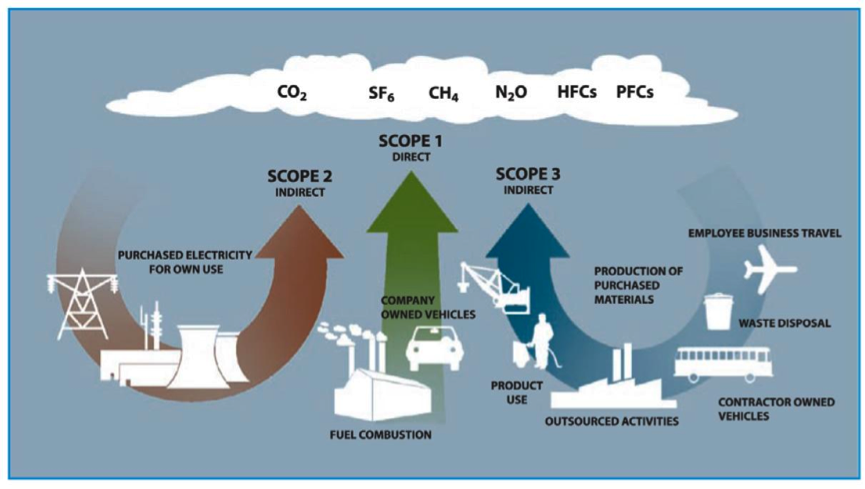
Image source: Greenhouse Gas Protocol
Developing a carbon report requires a complete review of your company data, acting as a massive hidden benefit for your operations. When was the last time you checked all your business data like this?
Your carbon report is developed to the following standards:
- The Greenhouse Gas Protocol: A Corporate Accounting and Reporting Standard (2004).
- The Greenhouse Gas Protocol: Corporate Value Chain (Scope 3) Accounting and Reporting Standard (2011).
- The Australian climate-related disclosure standard AASB S2.
And should your organisation wish to go beyond carbon reporting, in preparation to:
- ISO 14068-1:2023 Climate change management — Transition to net zero — Part 1: Carbon neutrality
- Science Based Targets initiative (SBTi). Corporate Net-Zero Standard Version 2.0.




The Carbon Reporting Approach What to Expect.
Data Requirements
Data Requirements
On the project start date you will receive a checklist with the data collection requirements for your operational activity data, such as:
Scope 1: Direct emissions: E.g. fuel combusted in fleet vehicles and stationary equipment.
Scope 2: Indirect emissions: E.g. Purchased electricity.
Scope 3: Indirect emissions: E.g. Purchased goods and services, freight, waste generated in operation, business travel, employee commute, products sold and lease assets.
Data Handling
Data Handling
Your activity data is converted into carbon emissions in tonnes of CO2 equivalent (tCO2-e) by applying emission factors from reputable sources like these:
- Department of Climate Change, Energy, The Environment and Water (Australia)
- Australian Bureau of Statistics
- Department for Energy Security and Net Zero (UK)
- Ministry for Cities, Environment, Regions and Transport (New Zealand)
- Environmental Protection Agency (USA)
The Report
The Report
When you supply me with data/information as you source it, by the time I have the final piece of data/information, your carbon report is ready within three – five working days.
The carbon report is presented to key company stakeholders in person or in an on-line meeting, which typically runs for two hours and includes findings and recommendations for next steps.
Presenting a carbon report comes with being able to discuss and make applicable recommendations based on the findings in the carbon report. Heidi’s experience on the ground and ability to transpose energy and resource consumption to carbon reduction potential are found to provide great value for her clients.
Support
Support
Heidi is available to answer any carbon reporting and reduction questions before, during and after the project, including helping you setting up justified estimates or assumptions where data is less than robust.
She prefers you to call or email when you need assistance instead of booking a meeting. That way your question is resolved quicker, the data collection does not stall, Heidi will have better data sooner and we can get to the presentation of the carbon report and the essential carbon reductions in good time.